From 4,000 saved articles to 400: how I tamed my reading backlog
A true story of a read-later-app refugee learning to read less, better.
Darryl Leyten
Founder, Tuck
·10 min read
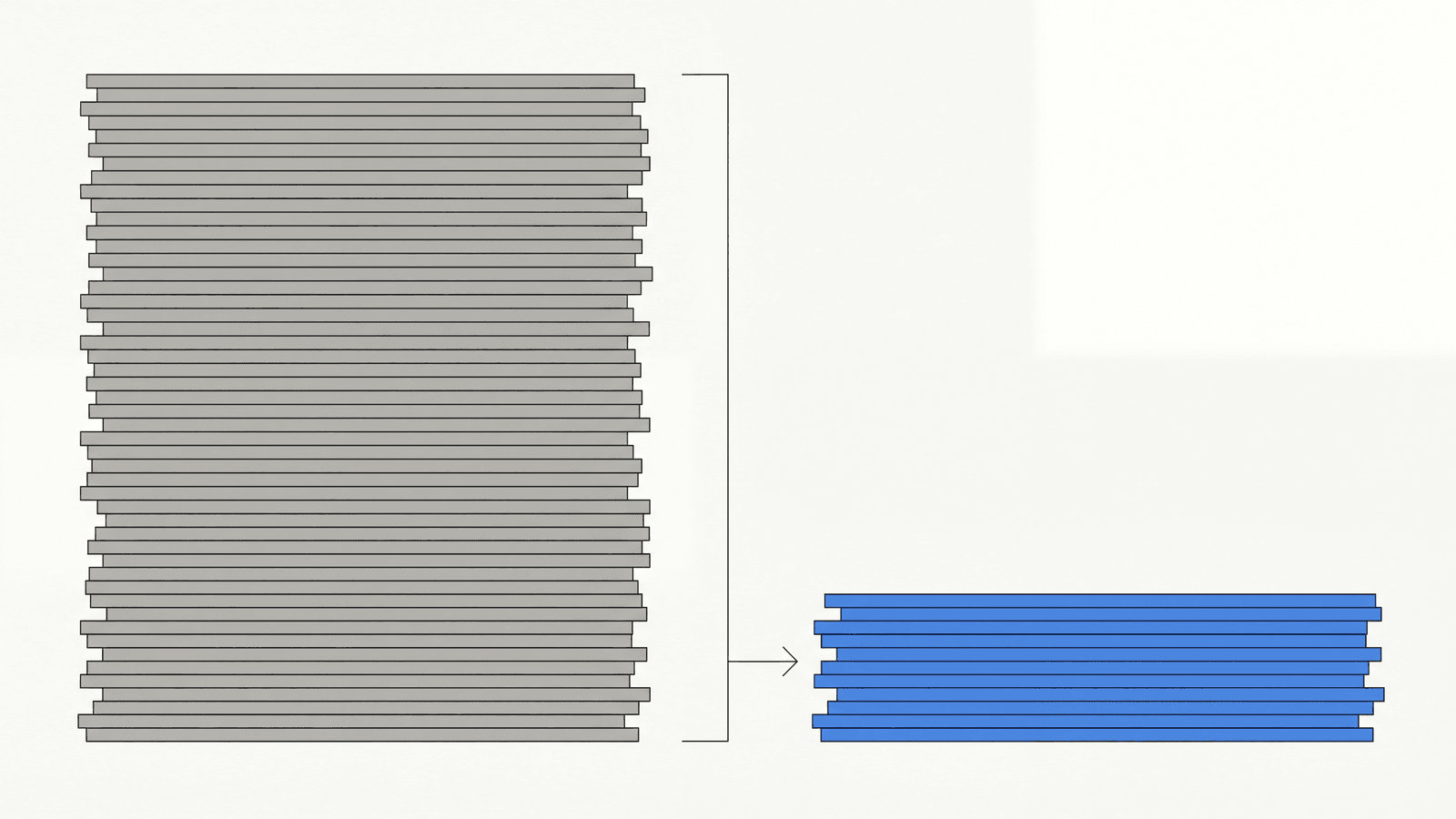
In early 2025, I had 4,127 articles in Pocket. A year later, my Tuck library is at 412, and I'm actually reading what I save.
This isn't a story about willpower. It's a story about three boring habits, one uncomfortable experiment, and a methodology that anyone can run on any read-later app. I'm writing it from the team building Tuck, but the techniques work in Instapaper, Reader, Matter, or whatever you use.
What I want you to take away: a 4,000-article backlog isn't a moral failing, and reducing it doesn't require reading more. It requires saving differently.
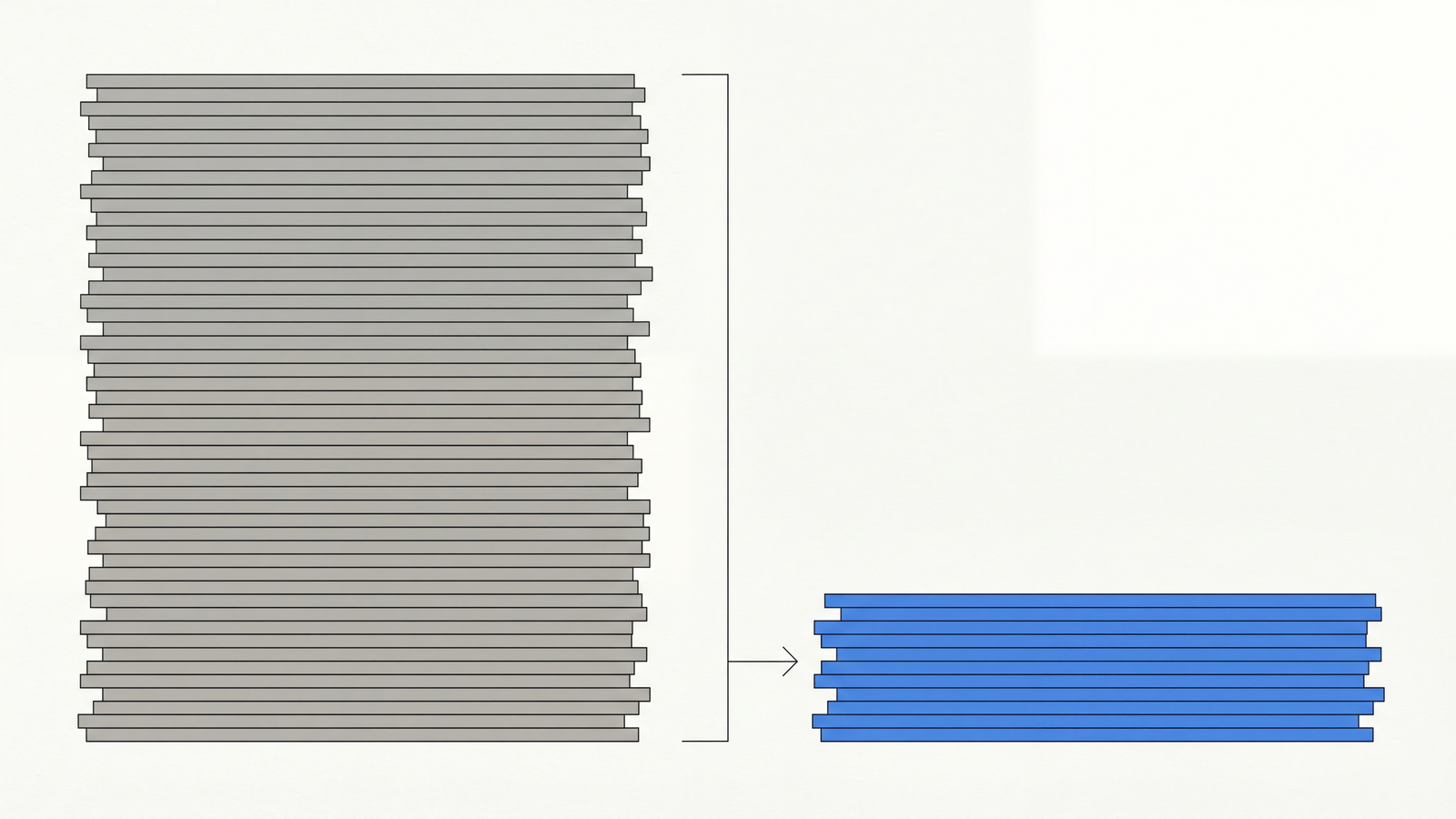
The starting state
Some context on how the backlog got to 4,127:
- 15 years on Pocket. From the original Read It Later iPhone app in 2007 through the Mozilla acquisition in 2017 to the shutdown announcement in May 2025.
- Roughly 1.3 saves per day across the whole period. That's not aggressive; it's two articles a day with weekends off.
- Reading rate that decayed over time. Early Pocket years (2010–2015), I read 3–4 articles a week. Later years, less than one. The save rate stayed roughly constant. The math is what it sounds like.
- No archive discipline. I'd archive an article maybe once a month when I felt guilty. Most read articles stayed in the queue, indistinguishable from unread ones.
When Mozilla announced the Pocket shutdown in May 2025, I had to confront the count: 4,127 entries. Maybe 600 of them I'd actually read. About 200 I'd saved twice. Probably 1,500 I no longer remembered why I'd saved.
The shutdown announcement was a forcing function. I could either ignore the count and let Mozilla delete it for me in November, or I could use the wind-down as a chance to actually decide what to keep.
Step 1: The audit
I went through every entry one at a time, in Pocket's own app, with a single rule: would I save this article today, knowing what I know now?
I committed to about 90 minutes a day for two weeks. Open Pocket, look at one article (title + URL + tags + date saved), decide keep / delete, move on.
Two weeks × 90 minutes = ~1,260 minutes ≈ 21 hours. At an average of 30 seconds per decision, I made roughly 2,500 decisions. The remaining 1,627 articles I batch-deleted at the end with no further review.
What I learned during the audit:
- About 65% of articles I'd saved, I would not save today. Most were on topics I no longer cared about, by writers I no longer followed, or about specific situations (a job I left in 2017) that didn't apply anymore.
- About 20% I would save today AND wanted to actually read. Real keepers: the long-reads I'd genuinely meant to read for years.
- About 15% I would save today as reference material. Not for reading end-to-end, but for searching later when a topic came up.
I kept the 35% (≈ 1,440 articles) as a list of URLs I bookmarked manually. The rest I let Mozilla delete. When Tuck launched, I re-saved the list one batch at a time, partly to seed my new library and partly because re-saving each article gave me one more decision point on whether I really wanted it.
Step 2: The pruning rules
Even 1,440 articles is way too many. I needed pruning rules to get to a backlog I could realistically engage with.
I made four rules and committed to them for 30 days:
Rule 1. Delete anything older than 18 months that I haven't opened. Past 18 months without opening means the article isn't urgent enough to read. The trend that made me save it is over; the news angle has decayed. I deleted ~600 articles under this rule. Felt great.
Rule 2. Archive anything I've already read. Sounds obvious. Wasn't doing it. Archive doesn't mean delete; it just removes the article from the active queue while keeping it findable via search. I archived ~200 articles.
Rule 3. Keep no more than 3 articles per tag in the active queue.
If I had 12 articles tagged engineering-management, that's a research project, not a reading list. I'd pick the 3 most relevant, archive the rest. Archived articles stay searchable; they just don't count against my "things I want to read soon" budget.
Rule 4. No new saves for 30 days. This was the uncomfortable one. The whole experiment is below.
After 30 days of these rules, the backlog was at ~280 articles. Down from 4,127.
Step 3: The 30-day no-save experiment
For 30 days, I committed to saving nothing. If I encountered an interesting article, I had two options:
- Read it now, fully or partially.
- Let it go.
There was no third option. No "I'll save it for later"; that mode was the entire problem.
The first week was hard. The save-link-to-Pocket muscle memory had been there since 2007; it's involuntary by now. I caught myself reaching for the share button maybe 30 times the first day. Most of the time I didn't actually need the article; I was deflecting the anxiety of "I might forget about this important thing."
Three things happened over the 30 days:
Days 1–7: discomfort. I felt like I was missing important reading. I wasn't. Most of the things I'd saved before would have gone unread anyway, so I was missing zero actual reading; just missing the anxiety relief of saving.
Days 8–14: clarity. When I had to choose "read now or let it go," I started picking "let it go" maybe 80% of the time. Most articles aren't worth 12 minutes of focused attention; the saving habit had been masking that fact for years.
Days 15–30: changed defaults. By the end of the experiment, saving felt deliberate rather than reflexive. When I saved an article during the next month after the experiment ended, I was choosing to save with the full knowledge that I was committing to reading it.
The 30-day experiment is the most important single thing I did. The pruning rules helped, but the experiment changed the underlying behavior that produced the 4,000-article backlog in the first place.
Step 4: The daily ritual
After the experiment, I needed a sustainable steady-state. I borrowed the 3-3-3 rule from a productivity essay I read years ago (and that I wrote up here for the Tuck blog):
- Read 3 articles every morning, from the top of the queue.
- Archive 3 articles I've finished or no longer want to read.
- Delete 3 articles older than a month I still haven't opened.
15 minutes a day. The Read-3 part is the only effortful one; Archive-3 and Delete-3 are mechanical.
What 3-3-3 does is enforce a maximum throughput on the queue. If I save 3 articles a day and I read/archive/delete 9, the queue shrinks by 6 per day. After 30 days, that's 180 fewer articles. Sustainable.
The cadence matters more than the specific numbers. If 3-3-3 is too much, do 1-1-1. If you have more time, do 5-5-5. The point is the daily-ritual structure that prevents the queue from compounding.
Where I am now
It's April 2026. The Tuck library has 412 articles. About 60 of them are starred favorites I expect to re-read. The remaining 352 are roughly:
- ~150 long-reads I'm genuinely planning to read (sorted by length so I tackle the short ones first).
- ~120 newsletters from the inbox at
you@in.thetuck.appthat I haven't gotten to yet. - ~60 reference-material articles I'm keeping for search but won't read end-to-end.
- ~22 articles I'm undecided on and will probably delete in the next 3-3-3 cycle.
37 of them are scheduled to be read this week, based on the priority order I review on Sunday afternoons. I'll read them. I'll highlight in maybe a third. I'll archive everything by Friday.
The system isn't perfect. I still over-save when I'm tired (anxiety + reflex). I still occasionally hit a 50-article weekend backlog when work gets intense. But the failure mode is "the queue went from 280 to 320" rather than "the queue went from 1,800 to 2,200." Smaller failure modes are recoverable; bigger ones aren't.
What I'd do differently
If I were starting from scratch with a 4,000-article backlog today, here's what I'd do:
- Audit the export first, ruthlessly. 60–80% of the backlog should not survive the audit. Be willing to delete things you "might want someday." You won't.
- Don't import the whole thing. Importing it preserves the problem. Pick the 20–30% you actually want and start the new tool clean.
- Run the 30-day no-save experiment immediately. Don't try to fix the queue while the queue is still growing. The behavior change is upstream.
- Set up a daily ritual (3-3-3 or whatever scale) on day 31. Without a steady-state cadence, the queue will rebuild over the next year.
- Pick a tool that supports archiving with bulk filters. "Select all articles older than 6 months" + "archive" needs to be one click. Otherwise pruning is too tedious to maintain.
If you're dealing with this same problem and your tool of choice doesn't support those things, Tuck does; but more importantly, so do most of the other modern read-later apps. The technique matters more than the tool.
A footnote on guilt
The 4,000-article backlog made me feel guilty for years. Like I was failing at being the reader I wanted to be.
The truth was simpler: the system I'd built for myself was structured to produce that backlog. Of course it produced one. Saving was easy and reading was hard, the asymmetry compounded for fifteen years, and I never built the daily habit that would have absorbed the difference.
When I let go of the guilt (when I stopped treating the 4,000 articles as a moral indictment and started treating it as a system-design problem) the audit happened in two weeks instead of two years. The 30-day experiment happened in a single attempt instead of three. The 3-3-3 ritual stuck immediately.
If you're looking at a four-figure backlog right now: it's not your fault, and you can fix it in about 60 days with the steps above. The articles you saved between 2018 and 2022 aren't going to be read. Bulk-archive everything older than 18 months. Run the 30-day experiment. Set up 3-3-3.
In a year, your backlog will be smaller. Your ratio of read-to-saved will be higher. And you'll feel less like you owe your own reading list an apology every time you open the app.
Darryl Leyten is the founder of Tuck. His current backlog: 412 articles, 37 scheduled for this week, and zero guilt. If you came from Pocket, /import/pocket explains how to start fresh, and the POCKET50 discount is still good.
Darryl Leyten
Founder, Tuck
Liked the read?
Tuck is a read-later app for people who want to actually finish what they save. Free to start, no credit card.
Get Tuck freeKeep reading
- story
Why we built Tuck
A personal essay about Pocket, what we lost, and what we're building.
Darryl Leyten
May 1, 2026 · 7 min read
- productivity
How to actually finish the articles you save
The real reason your read-later list grows faster than you read it, and five techniques that work.
Tuck Team
Apr 30, 2026 · 8 min read

One email a month.
Best of the blog, plus the occasional product update. No fluff.