Why we built Tuck
A personal essay about Pocket, what we lost, and what we're building.
Darryl Leyten
Founder, Tuck
·7 min read
I had 4,127 articles in Pocket when Mozilla announced the shutdown on May 22, 2025.
Most of them I'd never read. Some of them I'd saved twice; there was no dedupe. A handful were saved during specific points in my life that I could place from the URL alone: the engineering manager links from when I was figuring out how to lead my first team, the parenting articles from the year my daughter was born, the long-reads on chronic illness from the year my mother got sick. The library wasn't valuable because I'd read every article. It was valuable because of what it was: a record of what I'd been thinking about for fifteen years.
Mozilla deleted it on November 12, 2025. By the time I'd processed what was happening, the export window had already closed. Fifteen years of saved reading, gone, and I'm one of millions of people in the same situation.
I don't want my reading list to depend on luck, on a corporate parent's mood, or on me checking Hacker News on the right Tuesday. So we're building Tuck.
The thing Pocket got right
Pocket was great in 2010. The browser extension was the first one I used that I didn't have to fight with. The mobile reader was clean. The "this Saturday on the train" pattern (save articles all week, read them on a long train ride) worked because Pocket genuinely synced and genuinely worked offline.
The free tier was generous. Premium was $44.99/yr. The deal was: pay us if you want full-text search, otherwise use it free. That deal stayed honest for fifteen years even after Pocket was acquired, which is rare.
The community was real. There was a "Pocket recommends" section curated by humans, not algorithms; you could discover writers you'd never have found in your own feed. The Discover feed was one of the few pieces of the modern internet that actually felt like the original internet.
What Pocket got wrong started after the Mozilla acquisition in 2017.
What stagnation looks like
For most of the years between 2017 and 2025, Pocket shipped roughly nothing. The Discover feed slowly went away. The mobile apps shifted from "frequently updated" to "occasional security patches." The browser extension stopped getting new features. The web app started looking dated, then started feeling slow.
There was no specific bad release. It was a thousand small omissions. Newsletters started becoming the most interesting reading on the web; Pocket never shipped a newsletter inbox. AI started being able to summarize articles usefully; Pocket never integrated it. Highlights became a standard feature in every competing app; Pocket never shipped highlights at all.
Eventually, Pocket became something Mozilla owned but didn't seem to care about. And then Mozilla did the thing companies do when they own something they don't care about.
What I want from a read-later app
Sitting with the inbox-zero feeling that came from losing the Pocket library in November 2025, I tried to articulate what I actually wanted out of the next decade of read-later. The list:
- A free tier that's actually useful. Not a 50-article trial. Generous enough that I'd recommend it to people who don't want to pay.
- Genuinely indie. Not owned by a corporate parent that might pivot. Funded by the people who use it.
- Active development. Ships features. Has a public changelog. Doesn't go quiet for years.
- Modern features that earn their keep. Highlights with colors and notes. AI summaries that help me triage. A newsletter inbox so I stop drowning in Gmail. Native TTS.
- All my devices. iOS, Android, web. Same library, same scroll position, same highlights everywhere. Not iOS-only, not "the web app is an afterthought."
- An export button that actually works, on every plan, in formats other tools can read. So I never lose my library to a corporate decision again.
That list isn't novel. It's just the table-stakes for what a read-later app should be in 2026. None of the existing apps had all of it. Reader had most but cost $13/mo and required a weekend to set up. Matter had most but only on iOS. Instapaper had been frozen for years.
So we built Tuck.
What we're trying to do
Three commitments, in order of importance:
1. Outlive the next big-tech decision
We're an indie team funded by Pro subscriptions. Not a subsidiary. Not VC-backed at a valuation that requires a 10× exit. Not a "build it cheap, sell it expensive, exit fast" play. We're trying to build a profitable indie business that pays a small team a sustainable salary and keeps shipping for a long time.
The math works because read-later is a category with low churn; people who pay for a read-later app keep paying for years. We don't need millions of users to be sustainable. A few tens of thousands of paying subscribers covers the cost of running the service and paying the team.
2. Make your data yours, literally
Every Tuck plan (including the free tier, including after you cancel) has a working "export everything to Markdown / HTML / JSON" button. No asterisks. No "Pro only." No "available within 30 days of cancellation." Just a button, on every account, that exports everything.
The reason this matters is the Pocket story above. If we ever shut down, change ownership, or do something you object to, you walk out with everything you came in with. Your reading library belongs to you, not us.
3. Stay genuinely useful, not feature-bloated
We're not trying to be Notion. We're not trying to be Readwise. We're not trying to be Twitter for readers. We're trying to be the read-later app that respects your time both inside the product (no ads, no upsells, no notification-bait) and outside it (the goal is for you to spend less time managing your queue, not more).
Some features we explicitly won't build:
- A social feed of what other people are reading.
- Spaced-repetition flashcards (Readwise does this better).
- A self-hosted version (Wallabag is better at that).
- Generative-AI features that exist for marketing rather than utility.
What we're focused on instead: making the core read-later loop (save, sync, read, highlight, finish) as fast and quiet as we can make it.
What we promise
If you're reading this and thinking about giving Tuck your library, here's what we're committing to:
- We're funded by subscriptions, not a subsidiary of Big Tech. We're not in a hurry to sell, exit, or pivot. Our incentives are aligned with you wanting to keep using the app for a long time.
- Your data exports in one click, on every plan, in formats other tools read. If we ever shut down (we don't intend to, but Pocket didn't either), you walk out with everything.
- We intend to be here in five years. Not a guarantee; nobody can guarantee that. But it's the plan, and the business model is structured to make it possible.
If we keep those three promises, the rest of the work (shipping features, fixing bugs, listening to users) falls out naturally.
A small note on the team
We're building Tuck in the Netherlands. Not in the Bay Area, not in a tech hub, not anywhere with VC offices on every corner. Most of the team grew up nearby and we'd rather work in a quiet office with good coffee than a loud city with overpriced rent.
This is mostly irrelevant to whether you should use Tuck, but I think it matters that the people building software you depend on are people you can imagine. We're not a logo. We're a small team trying to build the read-later app we ourselves want to use for the next fifteen years.
If you've made it this far, try Tuck free. If you came from Pocket, the Pocket-refugee discount is still good: POCKET50 for 50% off your first year of Pro. If you have feedback or just want to say hi, email me at hello@thetuck.app. I read every email.
Darryl
Darryl Leyten is the founder of Tuck. Before Tuck he was an engineer at three different startups and a long-time Pocket user. He still misses Pocket's Discover feed.
Darryl Leyten
Founder, Tuck
Liked the read?
Tuck is a read-later app for people who want to actually finish what they save. Free to start, no credit card.
Get Tuck freeKeep reading
- productivity
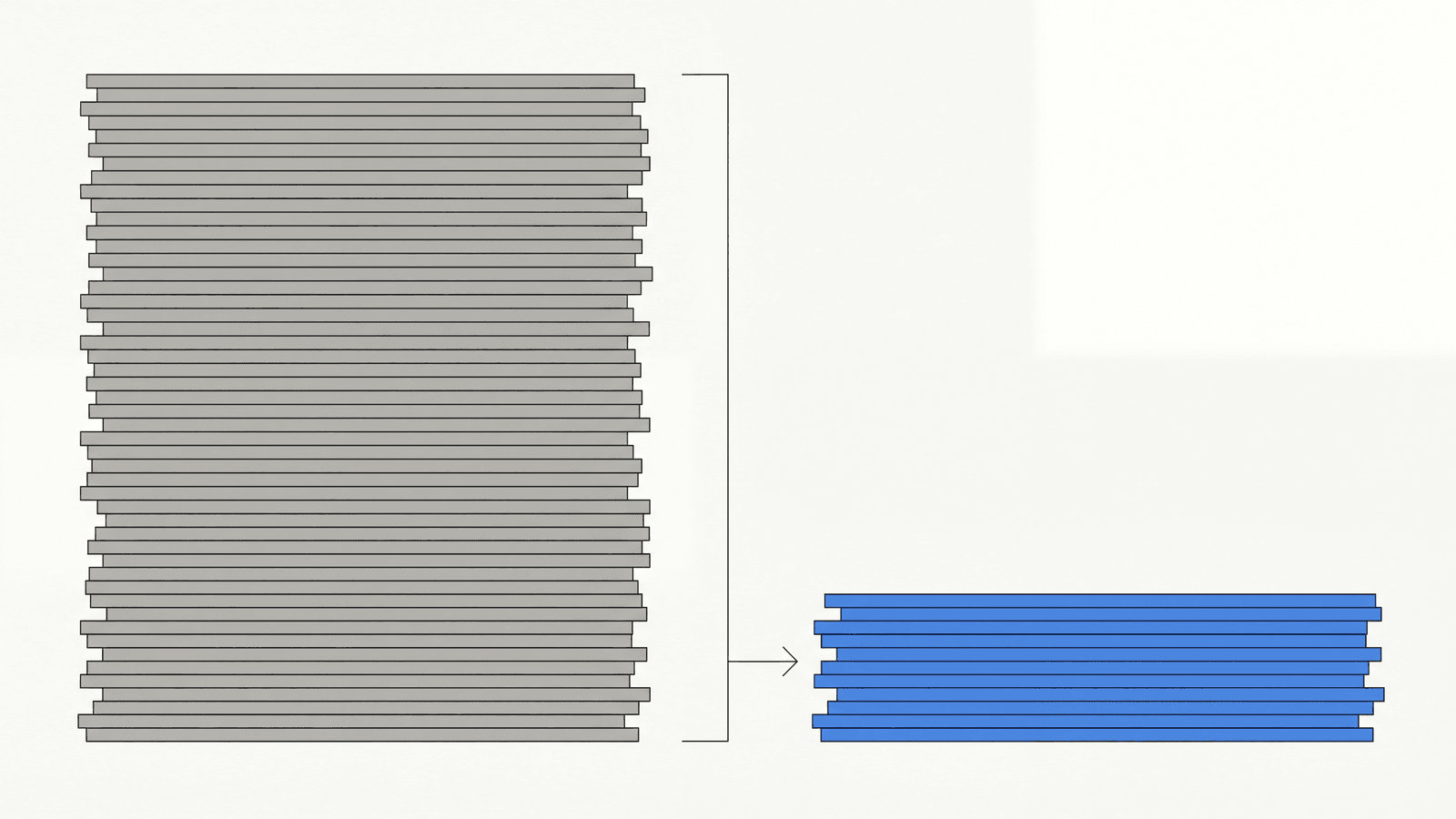
From 4,000 saved articles to 400: how I tamed my reading backlog
A true story of a read-later-app refugee learning to read less, better.
Darryl Leyten
May 2, 2026 · 10 min read
One email a month.
Best of the blog, plus the occasional product update. No fluff.