How to actually finish the articles you save
The real reason your read-later list grows faster than you read it, and five techniques that work.
Tuck Team
Recovering bookmark hoarders
·8 min read
If you've used a read-later app for more than six months, your unread queue is in four digits. Probably five. You add three articles a day, you read one a week, the math doesn't math.
This isn't a moral failing. It's a structural one, and it's solvable.
I'm going to argue that the gap between saving and reading is mostly about three things you can change: a default that's set wrong, a missing daily ritual, and one experiment most people are too embarrassed to try.
Why the queue grows faster than you read it
Two reasons, both psychological:
1. Saving is a coping mechanism. When you skim Twitter or your RSS feed, every interesting headline triggers a tiny anxiety: "this looks important and I might forget about it." Saving the link to a read-later app makes the anxiety go away. The brain registers "I've handled this", even though you've handled exactly nothing. It's filing-as-deflection.
2. Reading takes 30 minutes. Saving takes 2 seconds. The asymmetry compounds. Your save rate is 100× your read rate, and over six months that's a 4-figure backlog. There's no version of this where the trend reverses without intervention.
Most read-later advice ignores this and tells you to "just read more." That doesn't work for the same reason "just exercise more" doesn't work; you're optimizing the wrong leg of the equation.
The fix isn't reading more. It's saving less, and finishing the things you do save with a daily ritual.
Technique 1: The 3-3-3 daily rule
This is the only technique that's worked for me consistently across two years. Every morning, before opening anything else:
- Read 3 articles from the top of your queue.
- Archive 3 articles you've read or no longer want to.
- Delete 3 articles you saved over a month ago and still haven't opened.
Total: 15 minutes. The Read-3 part is the only effortful one; Archive-3 and Delete-3 are mechanical.
The Delete-3 step is the most important and the most uncomfortable. The articles you saved a month ago and still haven't opened are sending you a clear signal: you're not going to read them. Delete them. Your future self isn't going to circle back.
After 30 days of 3-3-3, the queue size starts to stabilize. After 60, it shrinks. The pattern interrupts the save-faster-than-you-read trend without you having to actually read more.
Technique 2: Audio on commutes
Text-to-speech in modern apps sounds genuinely good. Native iOS voices are near-human, work offline, and play in the background while you walk, drive, or run. (We ship this in Tuck Pro, but the same is true for Reader, Matter, and Instapaper Premium; pick whichever app you already pay for.)
What I've learned about audio reading after about a year of doing it daily:
- Articles under 2,500 words are great for audio. Above that, your attention drifts and you stop following.
- Listen at 1.25× by default. Default speech is too slow. 1.5× is fine for news, 1.25× for analysis. Bump up another notch on a third re-listen.
- Audio doesn't replace reading; it supplements it. I listen to triage. If an article is genuinely interesting at audio speed, I come back and read it visually with highlights. If it's not interesting at audio speed, I would have abandoned it visually anyway.
- Background playback is non-negotiable. Anything that requires the screen on doesn't survive a real commute. Lock-screen controls + background playback in the OS native player.
This single change (listening to one article a day on the morning commute) accounts for maybe a third of the articles I finish. They're articles I would have skipped if reading was the only option.
Technique 3: Short-reads-first
Sort your queue by reading time, ascending. Read the 4-minute pieces first.
This sounds trivial and it changes everything. Most read-later queues are dominated by long-reads (the 12,000-word New Yorker piece you've been meaning to get to since 2022). Long-reads have an out-sized share of the queue but make up a tiny share of what you actually finish. Short-reads (the 800-word op-ed, the 1,200-word product-launch analysis) get done in single sittings and make a visible dent in the count.
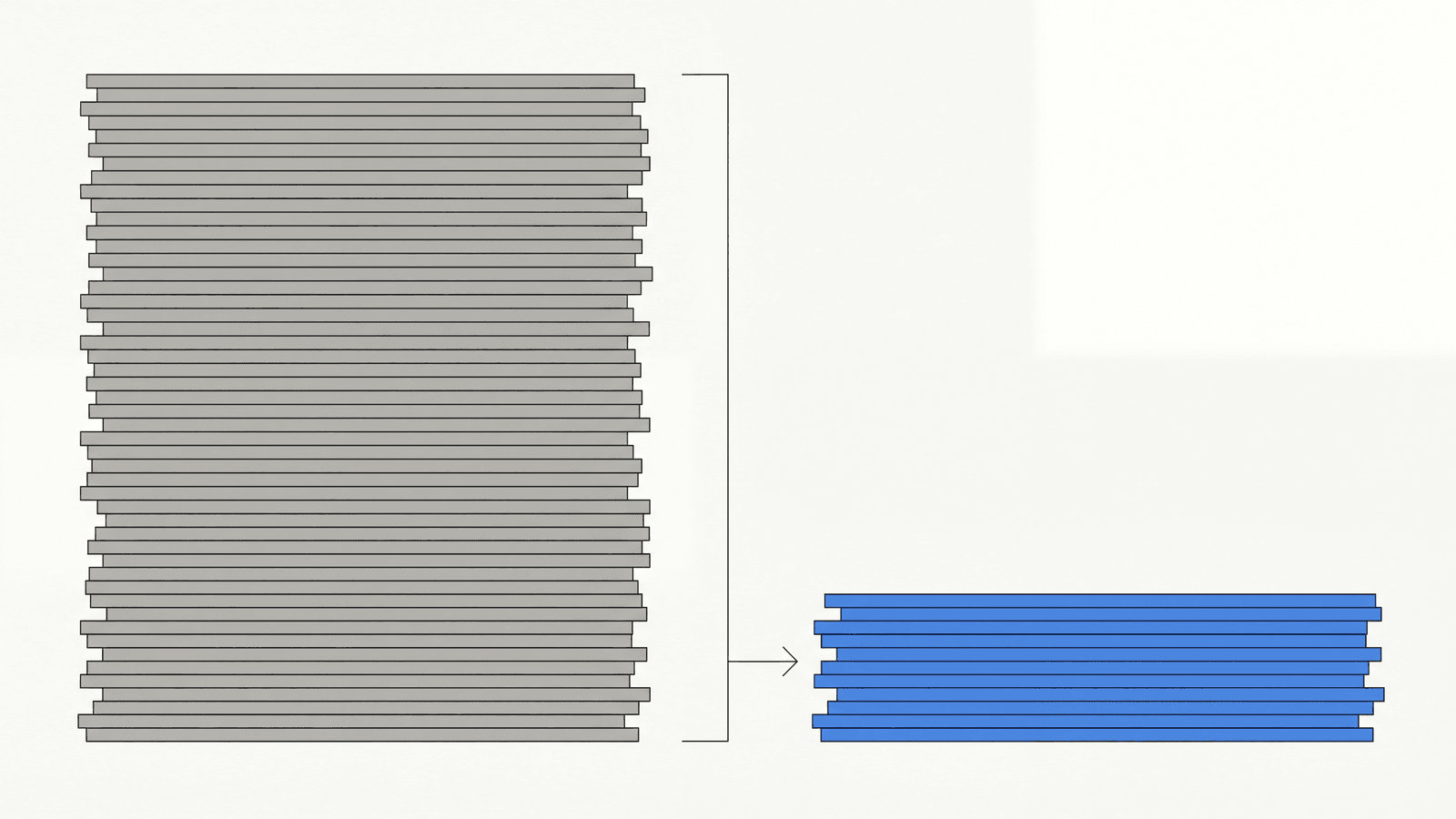
I went from 1,800 unread articles to 400 over six months partly by reading 4-minute pieces in ~5-minute pockets between meetings. The 12,000-word New Yorker pieces are still there. They're still going to be there next year. The short ones I would have skipped, I now finish.
Most read-later apps let you sort by reading time. Use it.
Technique 4: The "no new saves until zero" experiment
This is the uncomfortable one.
For 30 days, save nothing. Read what's already in your queue until you hit zero. If you fail (you'll fail), reset and try again.
I tried this three times. The first time I lasted four days. The second time, eleven. The third time, I made it to zero, about 23 days in, when my queue was small enough that one focused weekend cleared the rest.
What I learned in those 23 days:
- I was saving as deflection ~70% of the time. Articles I "definitely needed to read" turned out to be articles I didn't even want to open once I'd committed to actually reading something.
- The first 5 days were hard because the impulse to save is involuntary. After day 7, the impulse weakened. By day 14, I'd stopped reaching for the share button on most articles.
- Reading-without-saving is a different mode of attention. You either read it now or you accept that you won't. There's no third option, and that absence makes you read more carefully.
Don't do this experiment forever. Do it once, get to zero, then reset with a stricter saving discipline.
Technique 5: Highlight as you read
This one is for the people who finish articles but don't retain them. (Almost everyone.)
Read with one finger on the highlight tool. When a sentence is genuinely worth remembering, highlight it. Don't highlight more than 5 things in a single article; the constraint is the point. The act of choosing what to highlight makes you read more carefully.
If your read-later app exports highlights to Markdown (Tuck does, Reader does, Matter does), pipe them into a note app you actually open. Once a week, skim the week's highlights. The act of re-reading consolidates them in long-term memory; not re-reading guarantees you forget.
I read about 4 articles a day. I highlight in maybe half of them. The ones I highlight, I remember six months later. The ones I don't, I forget within a week. Reading without highlighting is closer to entertainment than learning; it's fine, just don't pretend it's the same thing.
What doesn't work
Every productivity culture has its own list of advice for this problem. Most of it is bad:
- "Use a Kanban board for articles." This adds overhead. Read-later is supposed to be low-friction; adding a workflow layer creates more friction than the reading does. Skip it.
- "Set a reading-time budget per week." Budgets work for things you control (calories, money). They don't work for variable-effort things (reading is hard on tired days, easy on rested ones). Adjust the rule, not the schedule.
- "Read everything you save by Sunday." Aspirational and demoralizing. The system is already broken if you've collected an unread backlog; adding a hard deadline doesn't fix the upstream problem.
- "Switch to a different app." Read-later apps are mostly the same shape. The bottleneck is your behavior, not the tool. (That said: if your current tool doesn't have TTS, sorting by length, and one-tap archive, the friction adds up; pick one with the basics.)
The minimum viable system
If 3-3-3 is too much, do this:
- Every Monday morning, archive everything you saved over a month ago and haven't opened. No reading required, just bulk-archive. (Most apps support this: search by date saved + filter to unread + select all + archive.)
- Read one short article (under 5 minutes) on your morning commute. Audio counts.
- That's it.
This minimum maintains a static queue (you'll archive about as fast as you save). It's not as good as 3-3-3, but it stops the queue from compounding into the four-figure abyss.
A footnote on guilt
If you're carrying a 2,000-article backlog right now and feeling guilty about it: don't. The backlog isn't a moral failing; it's a default of the system, and the article you're reading is one example of what happens when you finally interact with it.
The articles you saved between 2018 and 2022 aren't going to be read. Bulk-archive everything older than a year. Start the count fresh. Use 3-3-3. Try short-reads-first. Listen to one piece on the commute.
In a year, your queue will be smaller. The quality of what you read will be higher. The fraction you remember will go up. And the pile of unread articles won't make you wince when you open the app on a Sunday morning.
If you're looking for a read-later app that supports all five techniques in this post (sorting by length, native TTS, one-tap archive, Markdown highlight export, bulk-delete-by-date), Tuck is built around exactly that workflow. Or stick with whatever you have; the techniques work in any decent app.
Written by the Tuck team: read-later refugees who built the app we wanted.
Tuck Team
Recovering bookmark hoarders
Liked the read?
Tuck is a read-later app for people who want to actually finish what they save. Free to start, no credit card.
Get Tuck freeKeep reading
- productivity
From 4,000 saved articles to 400: how I tamed my reading backlog
A true story of a read-later-app refugee learning to read less, better.
Darryl Leyten
May 2, 2026 · 10 min read
One email a month.
Best of the blog, plus the occasional product update. No fluff.